Clearing the Confusion: What Is a Crime Survivor? Understanding the Many Faces of Victimization
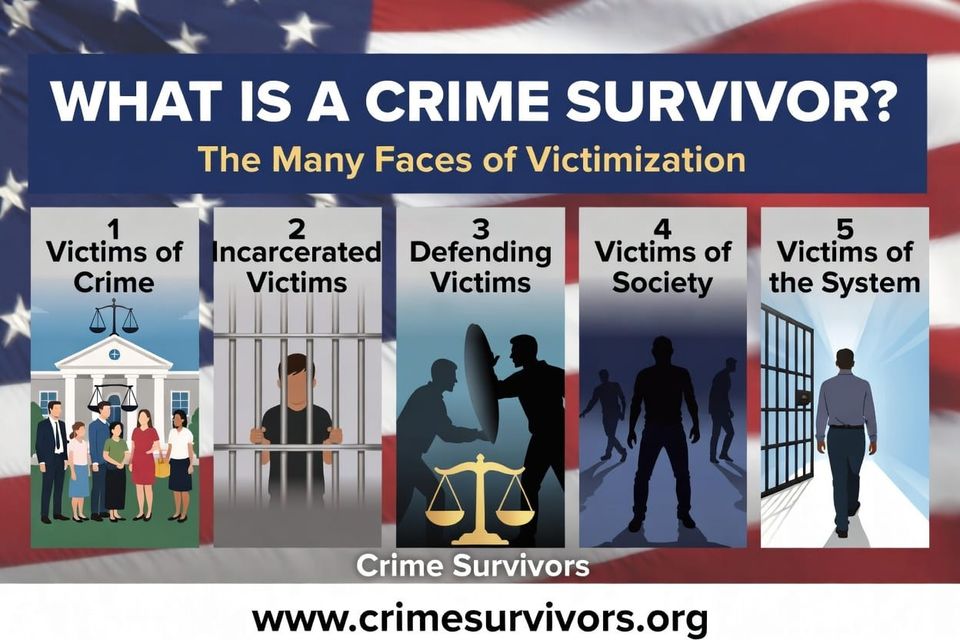
With so much talk in the news about crime victims and the ongoing debates around the soft on crime policies of bail reform and cashless bail, there is widespread confusion about who truly qualifies as a crime survivor and the different types of adversity they face. Crime Survivors, a leading victim advocacy organization dedicated to authentic survivor voices, wants to set the record straight. Victimization is not one-size-fits-all. It spans a broad range—including victims of crime, incarcerated victims, defending victims, victims of society, and victims of the system. These distinctions matter deeply, especially when policies like cashless bail and pretrial release risk prioritizing offenders over the innocent people harmed by them. To learn more, visit www.crimesurvivors.org.
Here are the five key types of victims that Crime Survivors identifies:
- Victims of Crime — These are the innocent victims who suddenly become part of a “sorority or fraternity” they never chose to join. They did nothing wrong yet suffer the trauma of violent offenses, theft, or other crimes. These are the classic, blameless survivors who deserve full accountability from the justice system.
- Incarcerated Victims — Individuals who committed a crime and ended up in jail, but whose path to offending often began earlier when they themselves were victims of crime as children or teens—with no one reaching out to help. These are victims who became perpetrators, highlighting how unaddressed trauma can cycle into future offending.
- Defending Victims — Innocent people who fight back against their attacker and injure the perpetrator in the process. Because they defended themselves from their own victimization, they can suddenly be viewed as suspects in the eyes of the law—turning protectors into the accused.
- Victims of Society — People trapped in low socio-economic environments where they are constant targets. They live with daily fear: fear of walking down the street, fear of neighborhood gangs, and constant fear from the sounds of violence surrounding them. Their victimization stems from the dangerous communities they were born into.
- Victims of the System — Wrongfully convicted individuals sentenced to prison for crimes they did not commit. They lose the majority of their formative years behind bars until their innocence is finally proven. When they walk free, they face a world that has moved on—making it extremely difficult to become law-abiding citizens with no support or knowledge of modern society.
By clearly defining these categories, Crime Survivors emphasizes that true justice must center the voices of innocent victims of crime first. In the heated discussions surrounding criminal justice, it is critical to remember that not all “victims” are the same—yet the system must protect those who never chose their suffering. Understanding these distinctions helps cut through the propaganda and ensures policies honor real accountability rather than coddling offenders. Visit
www.crimesurvivors.org today to read the full flyer, support survivor-led advocacy, and stand with those who demand justice.