When Judges Apologize: The Justice System’s Dangerous Inversion of Victim and Perpetrator
By Patricia Wenskunas
As a victim of violent crime and one who has spent decades fighting for victims’ rights, I have seen the justice system fail families time and again. But what happened in a Washington, D.C., federal courtroom on May 4, 2026, represents a new low. U.S. Magistrate Judge Zia Faruqui looked at Cole Tomas Allen, the 31-year-old man charged with attempting to assassinate President Donald Trump at the White House Correspondents’ Dinner and shooting a Secret Service agent and offered him an apology.
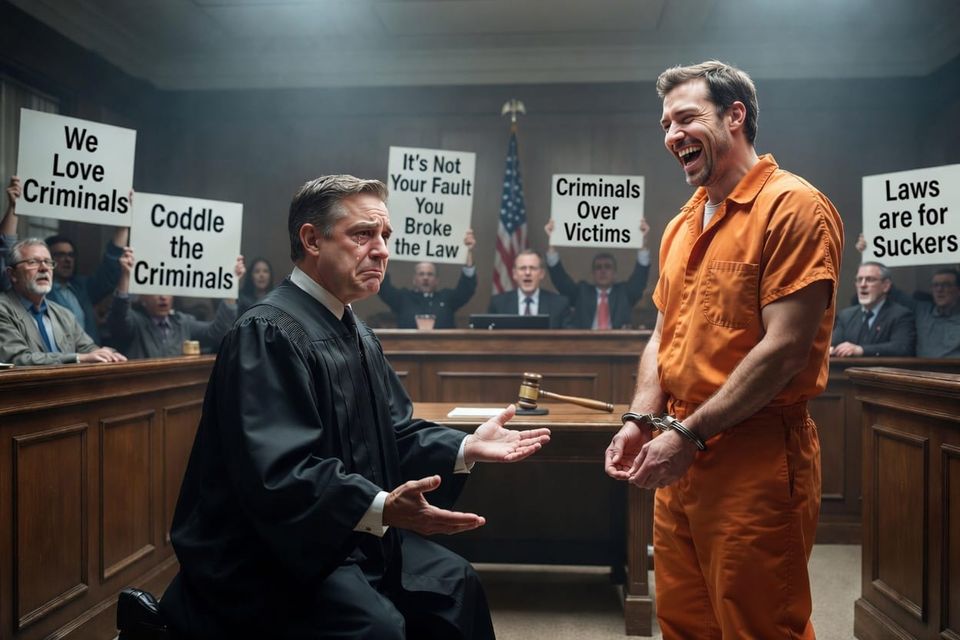
“I’m sorry,” the judge said. “Whatever you’ve been through, I apologize for the prior week.” He expressed “grave concerns” over Allen’s pretrial detention conditions, including temporary placement on suicide watch, isolation in a safe cell, and being denied a Bible. The judge even compared the situation unfavorably to the treatment of January 6 defendants, demanding immediate improvements.
Let that sink in. A man stands accused of trying to murder the President of the United States and wounding a law enforcement officer protecting him, an act of political violence that could have claimed countless lives, and the court’s first priority is to comfort him. Not the President. Not the injured Secret Service agent. Not the terrified families and attendees at the event. Not the American people who watched another assassination attempt unfold in real time. The victim, or in this case, the intended victims, barely register.
This is not an isolated lapse in judgment. It is the latest symptom of a toxic trend that has infected our criminal justice system: defendants are increasingly cast as victims, while actual victims of crime are sidelined, dismissed, or treated as afterthoughts.
We have watched this inversion play out for years. Soft on crime policies release dangerous defendants back onto the streets with little or no financial accountability, only for them to reoffend. Pretrial services agencies and courts bend over backward to protect the “presumption of innocence” of the accused — even when that accused has just tried to kill the leader of the free world — while victims wait years for trials, relive their trauma in court, and often receive no meaningful restitution or closure. Mental health excuses, claims of “harsh” jail conditions, and endless procedural protections for perpetrators have become the dominant narrative, while victims’ rights under laws like the Crime Victims’ Rights Act are routinely ignored in practice.
Cole Allen is presumed innocent until proven guilty, of course. That is a bedrock principle of American justice. But presumption of innocence does not require presumption of sympathy. It does not require a federal judge to publicly apologize to a man who allegedly armed himself, traveled to Washington, and opened fire with the explicit intent of assassinating the President. The Secret Service agent who took a bullet protecting our nation’s leader deserved better from the court. The President and every American who depends on the rule of law deserved better.
When the system expends more energy worrying about whether a would-be assassin has access to a Bible or a window in his cell than about delivering swift accountability to victims, we have lost our moral compass. This is the same mindset that fuels soft-on-crime policies across the country — policies that have led to skyrocketing recidivism, overwhelmed courts, and shattered families.
At Crime Survivors, we hear from victims every single day who feel invisible. Mothers whose daughters were murdered, only to see the killer released on low bail or given a plea deal that minimizes their suffering. Business owners are terrorized by repeat offenders who cycle through the system with no real consequences. Survivors of political violence who watch courts treat their attackers with more compassion than they ever received.
The message being sent to victims is clear and devastating: your pain is secondary. The comfort and “dignity” of the defendant — even one accused of trying to murder the President — comes first.
Enough. It is time to restore balance. Courts must stop coddling violent offenders under the guise of compassion and start prioritizing public safety, victim rights, and true accountability. But the deeper fix is cultural: judges, prosecutors, and policymakers must remember who the real victims are.
Cole Allen’s case is not about jail conditions. It is about whether we still believe that attempting to assassinate the President of the United States is a serious crime that demands serious consequences — not apologies.
The victims deserve nothing less. And until the system remembers that none of us are truly safe.